December 11, 2025
At this year’s Ohio Economic Development Association Summit, Edward Erfurt of Strong Towns delivered a thought-provoking presentation on the housing crisis—one that challenges us to look beyond numbers and policies, and instead focus on systems, strategy, and the power of local action.
Edward’s Big Idea:
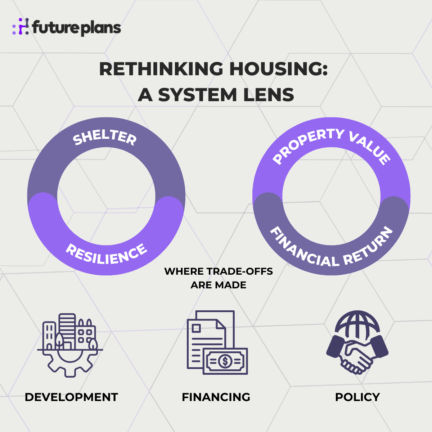
The housing crisis isn’t just about building more units or lowering interest rates. It’s a systems problem—one that requires us to rethink how we approach development, financing, and community resilience. Edward highlighted the tension between housing as shelter (affordable, accessible) and housing as investment (property values, financial returns). He traced the history of U.S. housing policy, showing how federal interventions and mortgage systems have shaped our communities, often at the expense of adaptability and local control.
A Critical Barrier: Local Policy and Zoning
One of the most powerful takeaways from Edward’s talk was the role of local building codes and zoning requirements in shaping who gets to participate in a community. Many towns have policies that restrict new construction to single-family homes, effectively shutting out creative solutions like accessory dwelling units, duplexes, backyard cottages, and starter homes. These rules don’t just slow innovation—they can also reinforce patterns of exclusion, making it harder for people from different socio-economic backgrounds to find affordable, flexible housing. In some cases, these policies echo the legacy of redlining, closing off opportunity and perpetuating inequality.
Edward challenged communities to re-examine these codes and ask: Are we making it easy to say “yes” to new ideas? Are we opening the door for incremental developers and diverse living arrangements, or are we unintentionally gatekeeping who gets to live and thrive here?
Why This Matters for Future Plans:
At Future Plans, we believe that ending poverty starts with helping individuals discover their unique strengths and connecting them to focused training and career opportunities. But none of this is possible without a stable foundation—and housing is a cornerstone. When people have access to affordable, adaptable housing, they’re better able to pursue education, training, and meaningful work. Just as Edward advocates for incremental developers, we champion incremental progress for individuals—one step at a time, building confidence and capacity.
The Takeaway:
Solving the housing crisis isn’t just about big projects or sweeping reforms. It’s about empowering local people to make small bets, take action, and build resilient communities. It’s about recognizing that the real product of our housing market is people—their dreams, their investments, their futures. And it’s about making sure our policies and codes open doors, rather than close them.
As we continue our mission to end poverty by unlocking individual greatness, let’s remember that housing stability and equitable access are part of the journey. By working together—across sectors, disciplines, and neighborhoods—we can create systems that support both personal and community growth.
Kudos to Edward Erfurt and Strong Towns for inspiring us to think differently—and for reminding us that the tools for change are already in our hands.